


Hi, I’m Christina. I’m 48 and work as a Swimming Development Officer. Spoiler alert: I’m currently training for the Trans Alba Race in June. This is a self-supported cycling ride around Scotland, covering just over 1,000 miles, four ferry trips, and 66,000 feet of climbing. Writing this scares me, as I haven’t officially said it out loud yet — and I have never done a self-supported race before.
Life has thrown me some unexpected challenges, so I figured now I should give myself some challenges too, try something new, and see what I’m capable of.
One of the biggest challenges began in September 2022. I was knocked off my bike while out on a training ride. It was a hit and run, and I sustained four fractures in my pelvis. It’s hard to describe how quickly something like that affects you: one moment I’m in top form, training for the Scottish Cycling Vet 40 Road Race Champs, and the next I’m unable to move for three days, then having to learn to walk again.
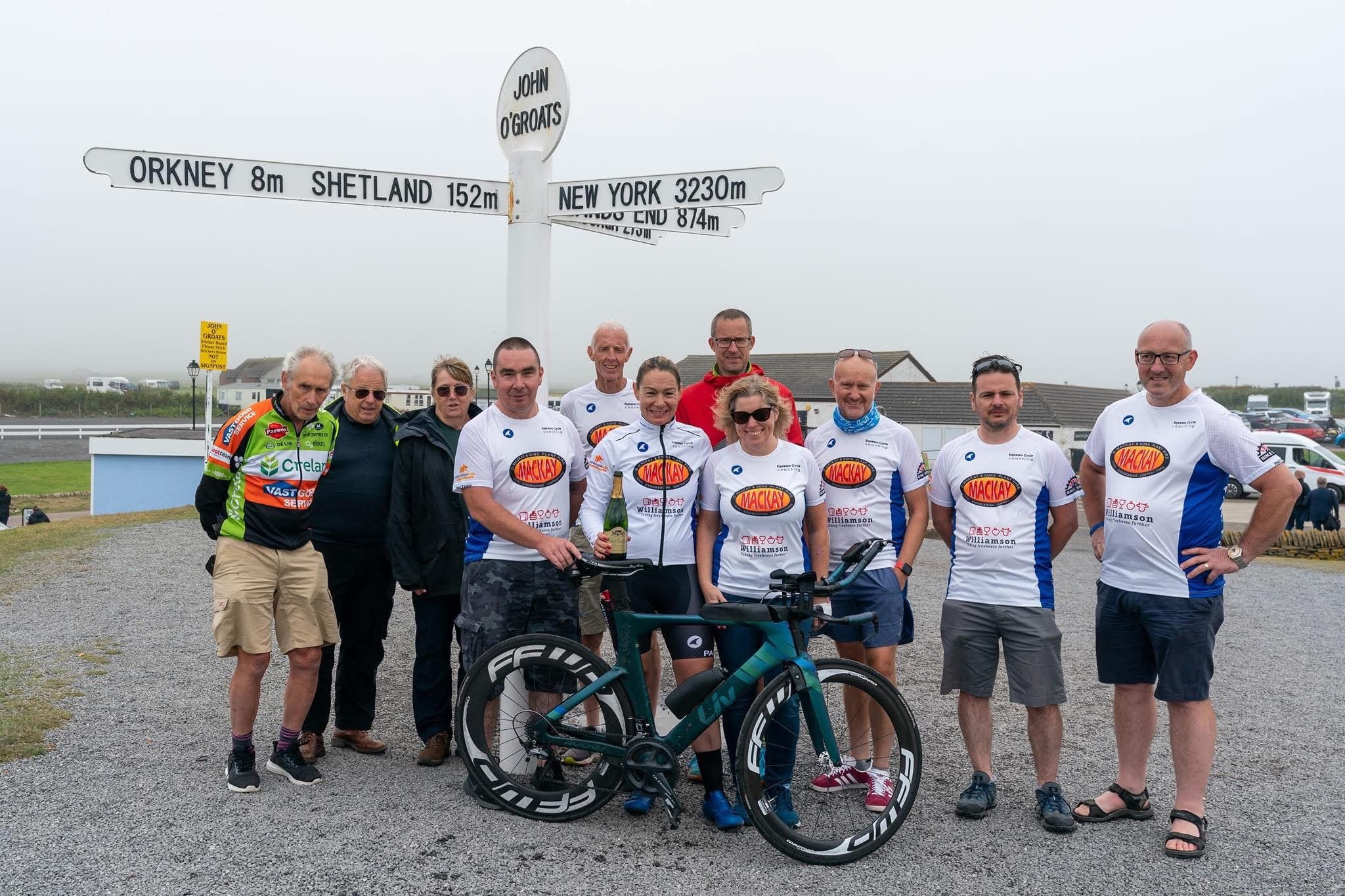
I went from having extreme goals — like training for and achieving the Guinness World Record as the fastest female to cycle from Land’s End to John O’Groats in 51 hours — to trying to walk from my kitchen to my sitting room with the aid of a Zimmer frame. Life changed overnight. I was physically and mentally challenged, and I began to question whether I would ever be pain-free again, and whether I even wanted to get back on my bike.
Thanks to the support I received from my friends within the cycling community, I was able to gradually find the love for cycling again. I got back on my bike. I refused to let that incident take it from me. I rebuilt bit by bit — and that rebuilding led to something I’m still proud of: I qualified for the UCI World Gran Fondo Road Racing Championships, and I also qualified to represent the Western Isles Cycling Team at the Island Games in Guernsey.
I had big plans for 2024 — and then, in May, everything changed. I had a stroke.
I had my alarm set for 05:00 for a 10-hour training session. I was going to be racing the 12-hour RTTC National Champs in a few weeks, and this was going to be a test ride to see if my pelvis could cope with that amount of time on the bike. The Saturday-night excitement of preparing my nutrition, kit, and getting my bike ready didn’t last long. I woke at 04:00 with an aching headache. I collapsed trying to get out of bed and realised my left side was paralysed.
Thankfully, I decided going out at 05:00 was not a good idea — but I genuinely thought it was “just a headache” and that it would go away. At 08:30, I tried to call an ambulance on the advice of a friend who was texting me and couldn’t understand my jumbled message. It was only when the operator answered and started asking questions that I discovered I couldn’t speak properly: my speech was slurred, I felt confused, and it was like an out-of-body experience.
Thankfully, I was able to give my address, and two paramedics were at my door within 10 minutes. I found myself in the same A&E bay at Forth Valley Hospital again, a year and a half after the hit and run. I was given devastating news: I had a blood clot on the brain, and I’d had a stroke.
I broke down. I thought this was going to be my life now — paralysed on one side, with slurred speech, and unable to think clearly. The following day I was admitted to the Stroke Unit. I was given every test to find the reason for having a stroke. Days later, it was discovered I had a hole in my heart (a PFO).
I was back at home, off work, and receiving occupational therapy. This time it was different. I knew how long it would take broken bones to heal, but I had no idea how long it would take to recover from a stroke — and the doctors couldn’t tell me either.
“Each person responds differently, and we cannot give you a timescale.”
That was the line I was given every time I asked, hoping someone would tell me I’d be okay again in a month… two months… six months… a year. Nope. Nada.
Once again, my world shrank to hospital rooms, scans, assessments, and questions I couldn’t answer. Would I be able to ride again? Would I be able to think clearly again? Would I ever trust my body again?
Thankfully, once again, my friends were there to support me in every way.
After my stroke, my friends invited me to the Sir Chris Hoy Velodrome — not with pressure, not with expectations, just with a gentle, “Come along. We’ll do this together.” They brought me into Women’s Track Fund sessions, and it’s hard to overstate how important that was.
The track felt like a safe space — somewhere I could ride without worrying that I would lose my hand grip. I’ve had nerve issues with my hands since the stroke, and I didn’t feel confident going out on bumpy roads.
Those sessions weren’t just about fitness. They were about confidence. About remembering I belonged in the cycling world. About finding joy again — the simple joy of turning pedals, being around bikes, and laughing with other women who just get it.
In 2025, I went from cautiously rebuilding to competing again — racing the Team Pursuit at the UCI World Masters Championships in Roubaix. Never in my wildest dreams did I think I’d be competing at this event. I gained my accreditation in 2018, having never done track racing before, and now I’m the proud owner of a silver UCI medal.
One positive I take from this is that I would never have been invited to the Women’s Track Fund if I’d been out riding miles and miles on the road. I’ve made great friends and memories during this time. Maybe things do happen for a reason.
This is the outlook I take now — along with a deep gratitude for being able to do things. When people ask why I do these crazy miles and challenges, it’s because I can. To be grounded twice and not knowing if I’d ever ride my bike again… while I can, I will — and I’ll enjoy every minute.
Well… maybe not the last two hours of a training ride to Inverness, getting caught in Storm David with snow!
My race calendar for 2026 is full — but not with all the same events as before. My challenges have grown wider.
After all… why not? 😊
Thank you to Christina MacKenzie for sharing her inspiring story of healing through resilience, connection and getting back on her bike.
For more information about stroke, visit the Stroke Association website.
May is Stroke Awareness Month, and Christina will be taking on the Trans Alba in June to raise funds for the Stroke Association. You can support her by visiting her fundraising page.
If you’d like to share your own cycling story in our monthly Scottish Cycling BlogHER feature, please email Melanie, our Women and Girls Development Manager, at [email protected].